Manufacturers continue to face a familiar challenge: production demands are increasing, but finding and retaining workers remains difficult.
At the same time, many facilities have little room to expand. Adding more manual packing stations or additional equipment isn't always practical when floor space is limited.
That's why more manufacturers are investing in packaging automation—not to replace people, but to help their existing workforce accomplish more while making better use of available space.
Here's what to consider when evaluating labor-saving packaging solutions.
Why Labor Challenges Aren't Going Away
Today's manufacturers are balancing several pressures at once:
- Ongoing labor shortages
- Rising labor costs
- Increasing production demands
- More product variety
- Limited floor space
Manual end-of-line operations often become the bottleneck. Employees spend valuable time performing repetitive tasks like loading cartons, packing cases, assembling displays, and palletizing products.
Automation helps move those repetitive tasks to equipment, allowing employees to focus on higher-value responsibilities throughout the facility.
Where Packaging Automation Has the Greatest Impact
Many labor-intensive tasks can be automated, including:
- Cartoning
- Case packing
- Variety pack assembly
- Retail-ready packaging
- Palletizing
- Product handling


Instead of staffing multiple manual stations, manufacturers can integrate these processes into one streamlined packaging system.
The result is improved production flow with fewer manual touchpoints.
Why Combination Systems Save More Than Labor
Modern combination packaging systems do more than automate individual tasks.
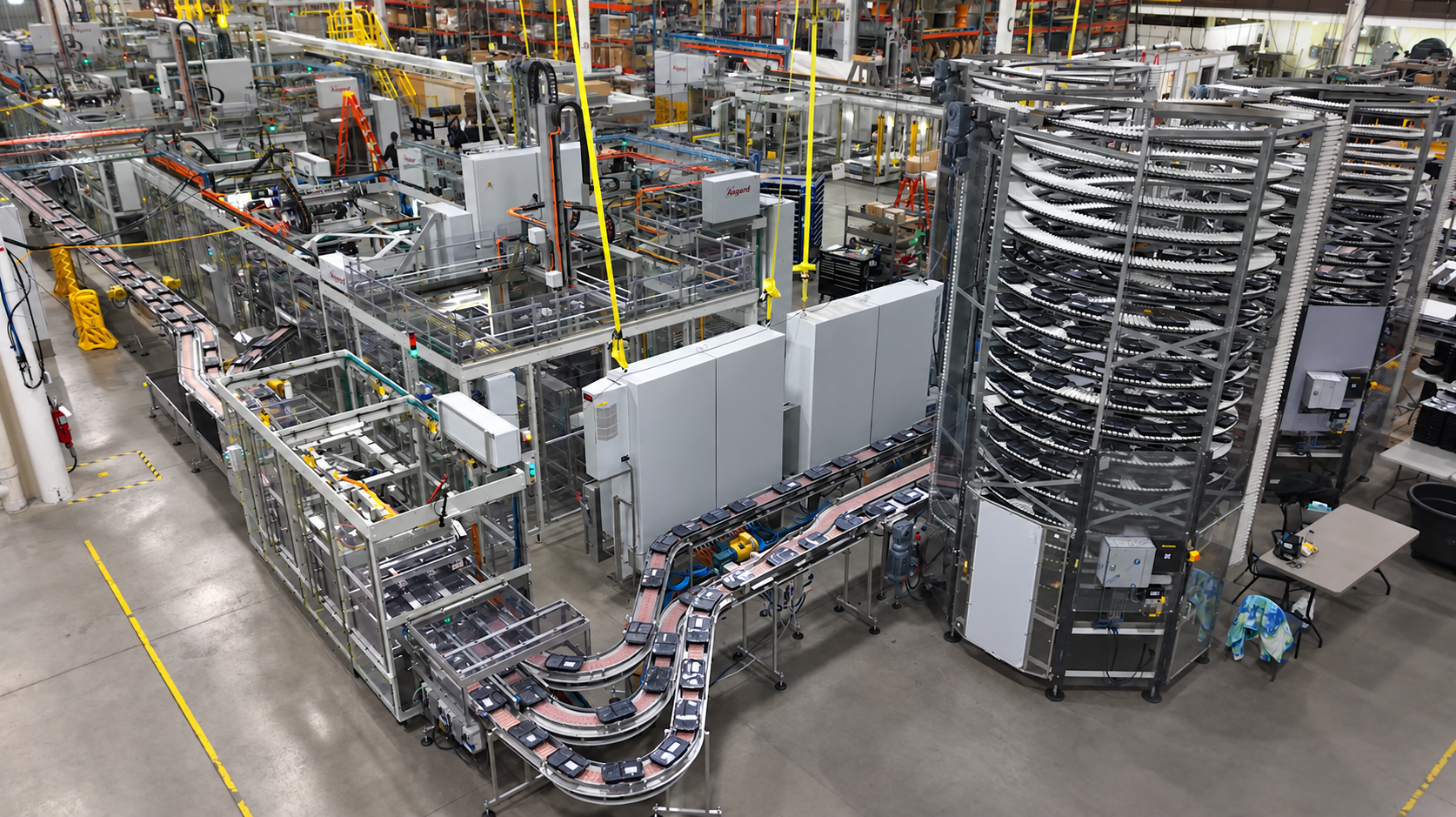
They combine multiple packaging functions into one integrated line, helping manufacturers:
- Reduce manual handling
- Eliminate unnecessary product transfers
- Improve product flow
- Simplify line operation
- Reduce floor space requirements
Combining processes often creates efficiencies that aren't possible with standalone machines.
Compact Equipment Maximizes Existing Space
For many manufacturers, expanding the building isn't an option.
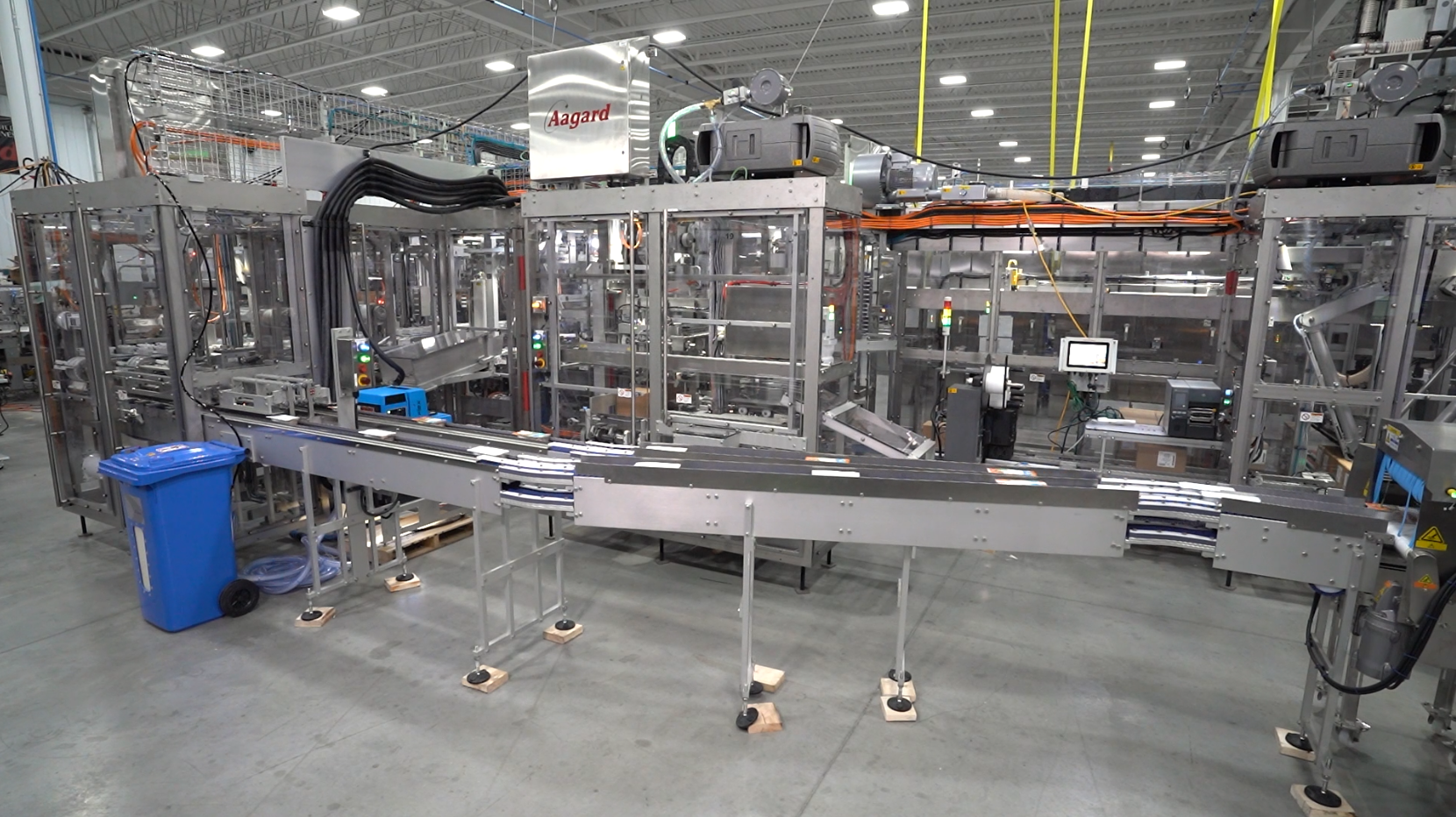
Compact packaging systems are designed to fit more capability into a smaller footprint by:
- Combining multiple operations
- Reducing conveyor length
- Eliminating redundant equipment
- Optimizing product flow
This allows manufacturers to increase production capacity without requiring additional facility space.
Think Beyond Labor Savings
The value of automation extends beyond reducing labor dependency.
Modern packaging systems can also help:
- Increase throughput
- Improve packaging consistency
- Reduce repetitive manual work
- Improve Overall Equipment Effectiveness (OEE)
- Support future production growth
When labor and space challenges are addressed together, manufacturers create more resilient operations.
How Aagard Helps Manufacturers Do More with Less
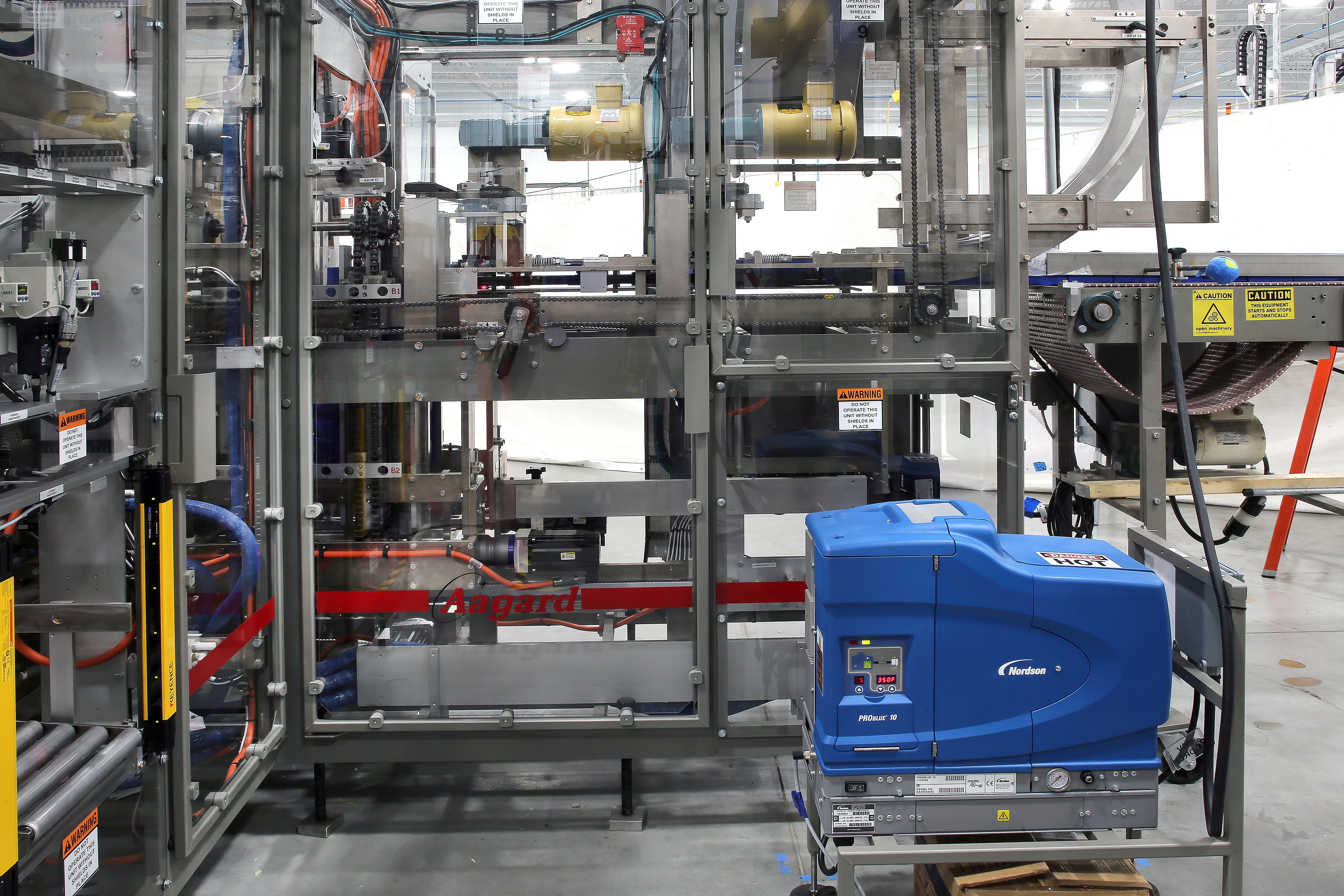
At Aagard, we design integrated packaging systems that help manufacturers maximize both their workforce and their facility footprint.
By combining multiple packaging processes into one coordinated system, manufacturers can improve efficiency, reduce manual handling, simplify operations, and create room for future growth—all without expanding their building.
Because every application is different, our engineering team works closely with customers to understand their products, production goals, and operational challenges before designing a solution that fits their operation.
Ready to Optimize Your Packaging Line?
If labor shortages or limited floor space are slowing production, it may be time to evaluate your packaging line.
Our engineers can help identify opportunities to reduce manual labor, improve line efficiency, and maximize your existing space.
Contact us today to discuss your application.
Frequently Asked Questions
-
How do manufacturers solve labor shortages?
Many manufacturers reduce their dependence on manual labor by automating repetitive packaging tasks such as case packing, cartoning, palletizing, and retail-ready packaging. This allows existing employees to focus on higher-value work while maintaining production throughput.
-
How do I reduce labor dependency in packaging?
Reducing labor dependency starts with identifying manual, repetitive tasks that can be automated. Integrating multiple packaging processes into one coordinated system helps minimize manual handling, improve consistency, and increase overall efficiency.
-
How do I eliminate packaging bottlenecks?
Packaging bottlenecks often occur where manual processes can't keep pace with production. Integrated automation helps balance product flow, reduce handling delays, and improve throughput across the entire packaging line.
-
Why is my end-of-line packaging slowing production?
Manual case packing, palletizing, and package handling frequently become production constraints. Automating these processes helps keep products moving while improving consistency and reducing downtime.
-
How can I improve packaging line efficiency?
Improving efficiency involves reducing unnecessary product handling, minimizing changeover time, integrating packaging processes, and using automation to streamline production from product infeed through palletizing.