Custom Palletizer Machines
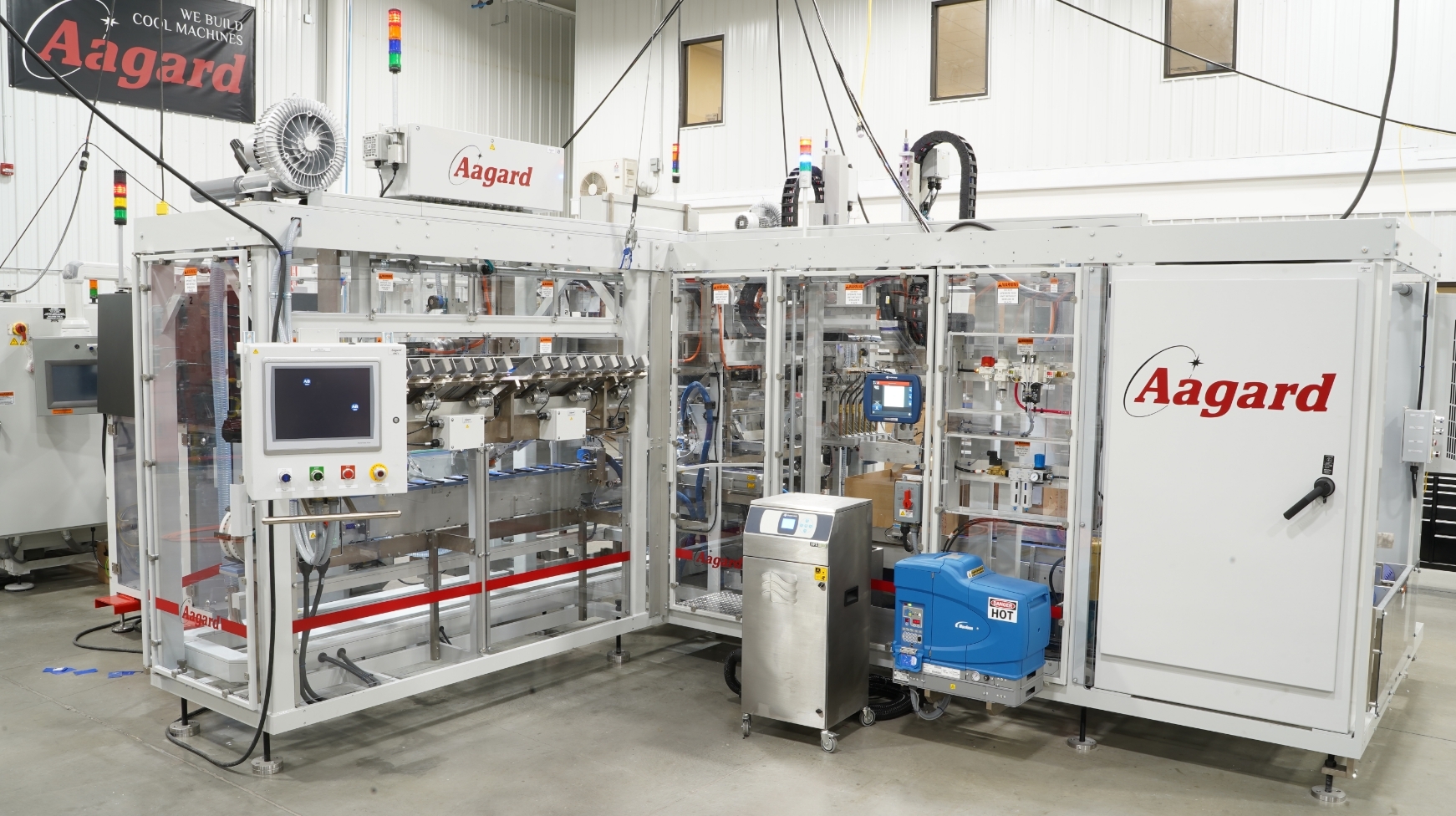
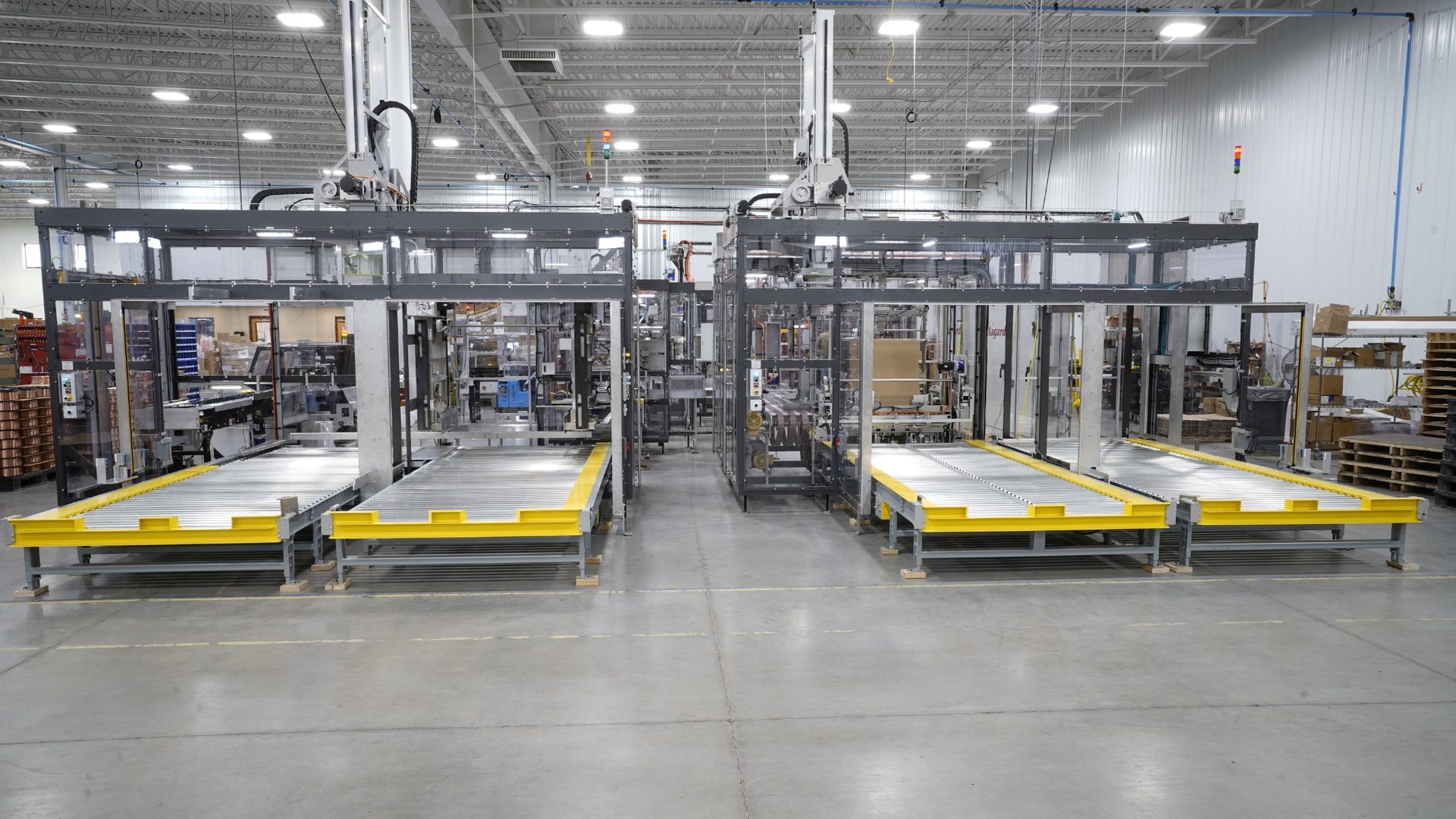
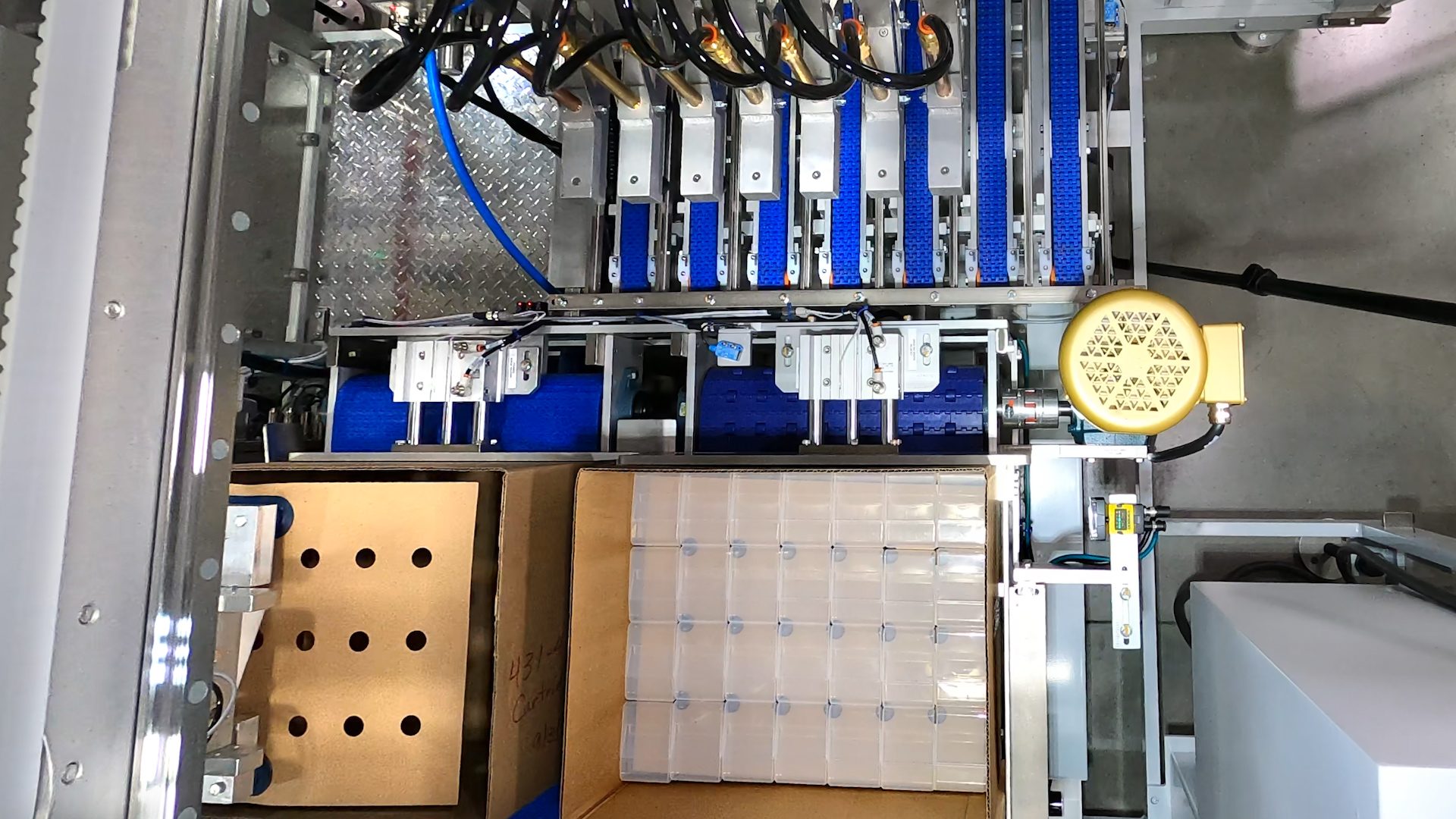
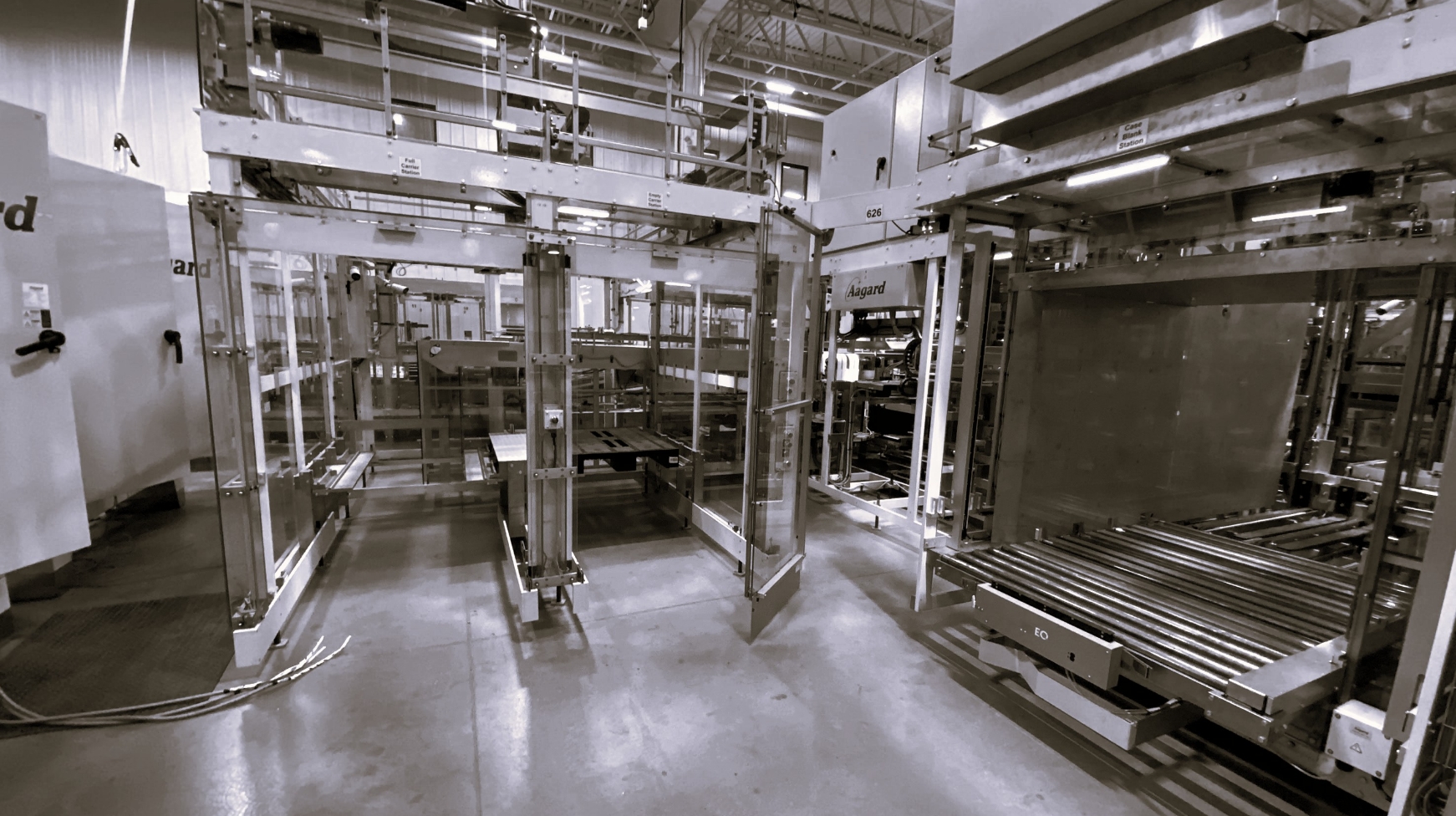
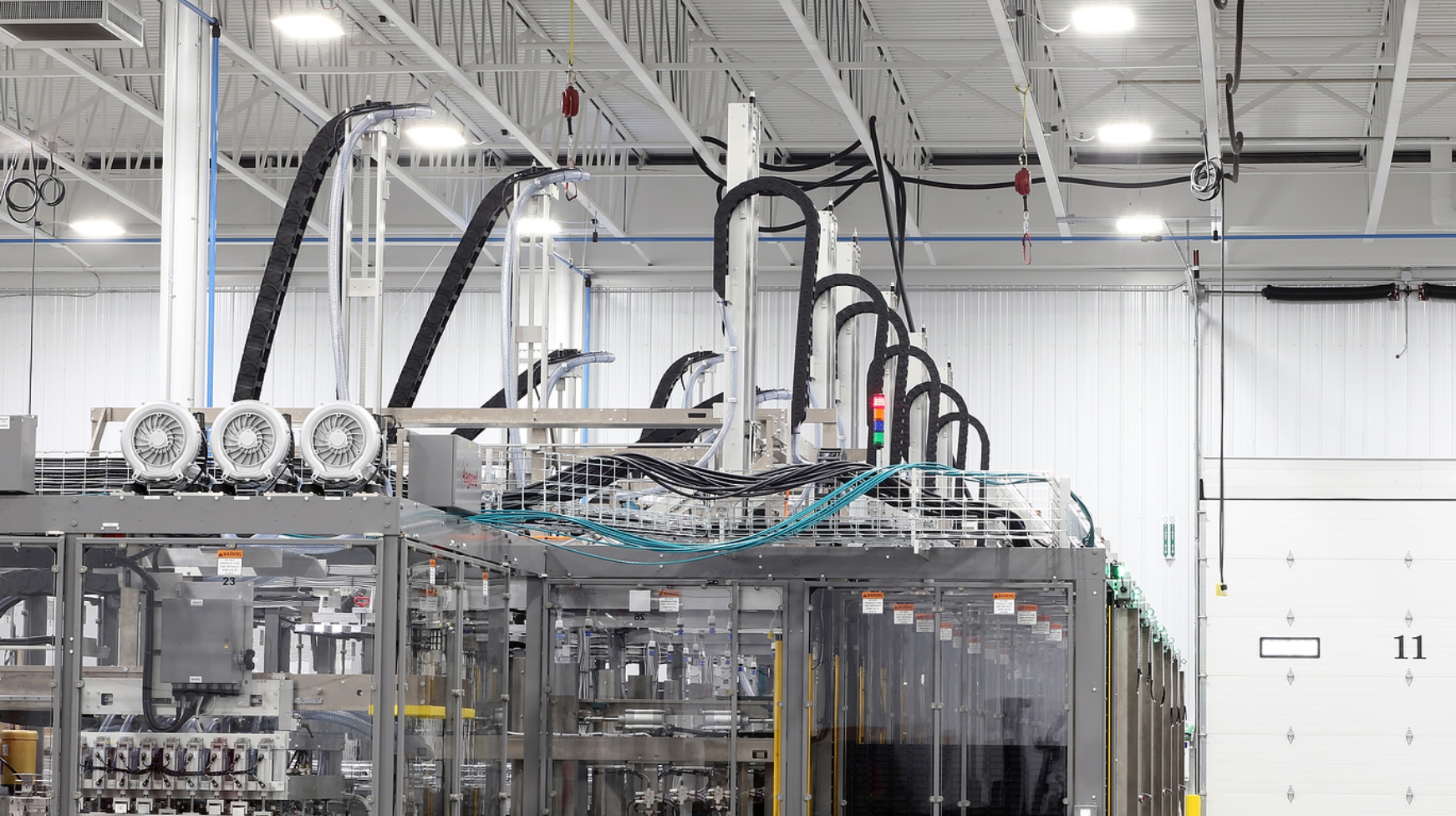
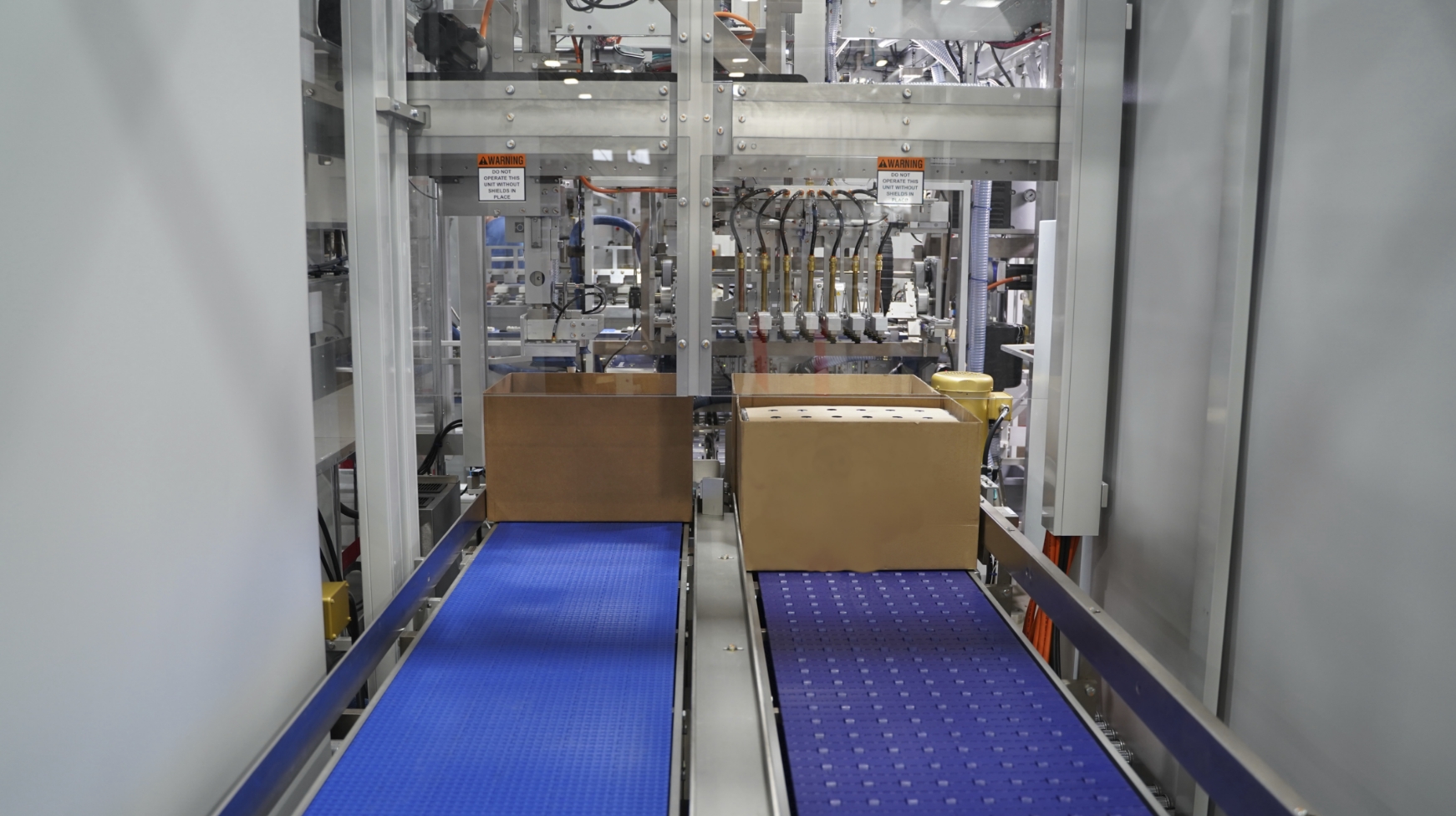
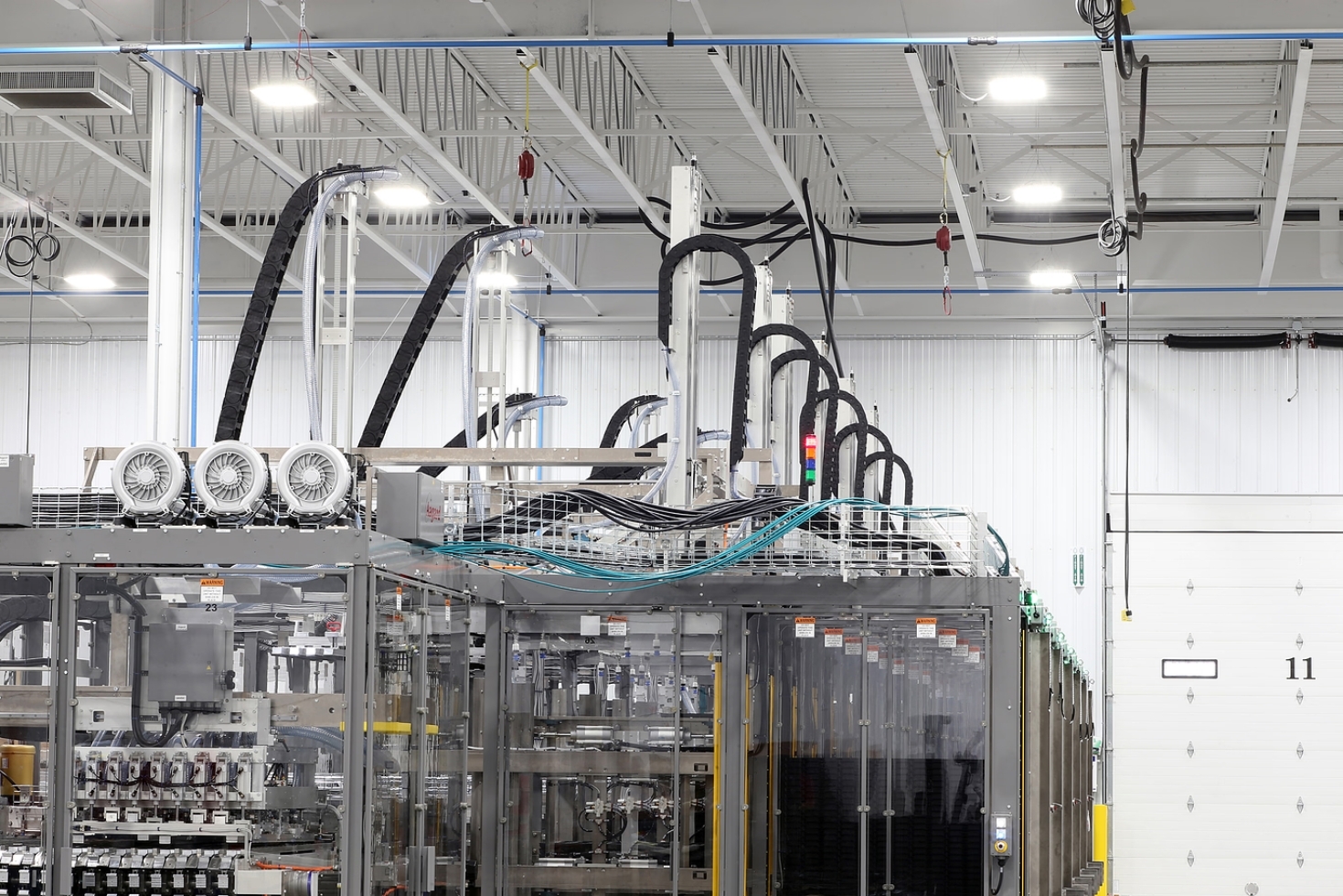
Aagard depalletizers automatically unload cases, containers, and products from incoming pallets and feed them into your packaging line at production speeds—engineered to your product, pallet configuration, and line layout. Each system is purpose-built to reduce manual unloading labor, stabilize infeed flow, and integrate cleanly with upstream and downstream equipment.
Aagard depalletizers are engineered to your application. If your line requires reliable infeed automation, consistent layer handling across multiple SKUs, or a depalletizing solution that fits into a space-optimized beginning-of-line system, that's exactly where Aagard's application-first engineering approach is designed to help.
Depalletizers Engineered to Your Infeed Requirements
Built for the Infeed Challenges Standard Depalletizing Equipment Can't Handle
Manual pallet unloading at the start of a line is one of the most labor-intensive, injury-prone tasks in a packaging facility. When volume grows, SKUs multiply, or floor space tightens, the problem compounds. Standard catalog depalletizers often can't adapt to the product mix, pallet configuration, or line integration requirements that CPG manufacturers actually face.
These are some common applications where depalletizing has to be engineered around the product and the line—not the other way around.
| Production Scenario | Configuration Match |
|---|---|
Manufacturer needs to eliminate manual pallet unloading to reduce labor, improve ergonomics, and stabilize beginning-of-line infeed across multiple shifts |
Semi or Full Auto Depalletizer engineered to your product, pallet type, and line rate |
Line runs multiple SKUs, container types, or layer patterns and needs reliable, repeatable layer handling without constant manual adjustment |
Robotic or Automatic Depalletizer with recipe management and layer detection |
Plant is integrating new upstream equipment and wants unified beginning-of-line controls with clean handoffs to downstream processes |
Fully integrated depalletizer with single, unified controls architecture |
Facility has a tight footprint and needs depalletizing and infeed conveying in the same compact envelope |
Custom footprint design to your facility constraints and line layout |
Incoming pallets vary in height, layer count, or pallet type and a fixed-spec machine can't handle the variability |
Purpose-built depalletizer configured around your actual pallet and product range |
Product fragility, container geometry, or orientation requirements create handling challenges that a standard sweep or push-style depalletizer can't solve reliably |
Robotic depalletizer with vision-guided handling engineered around your product characteristics |
Aagard is the right fit when the application requires purpose-built product handling, integration, or space-driven design.
About Our Process
Types of Automated Depalletizing Systems We Build
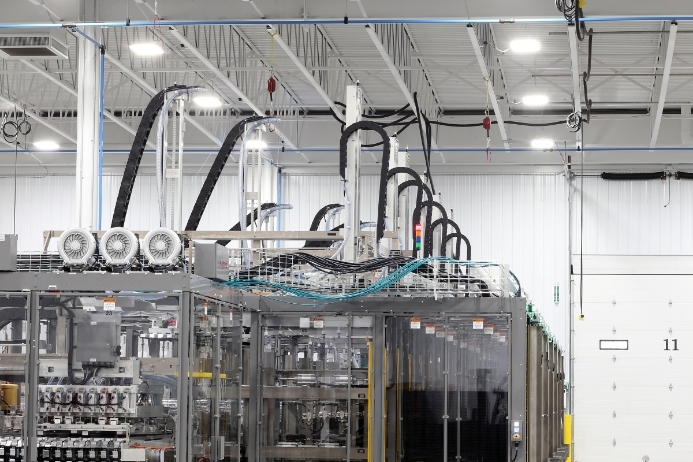
Robotic
Robotic
Uses robotic arms with vision or layer detection to handle a wide range of products, pallet patterns, and applications requiring flexible, gentle, and precise depalletizing.
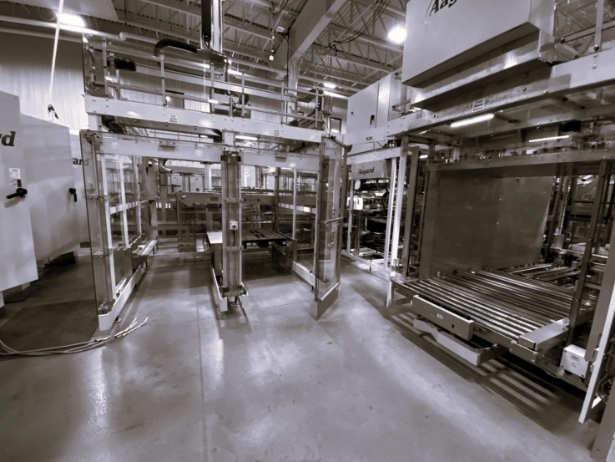
Automatic
Automatic
Removes and transfers full product layers from pallets into the line with minimal operator involvement for consistent, high-throughput operation.
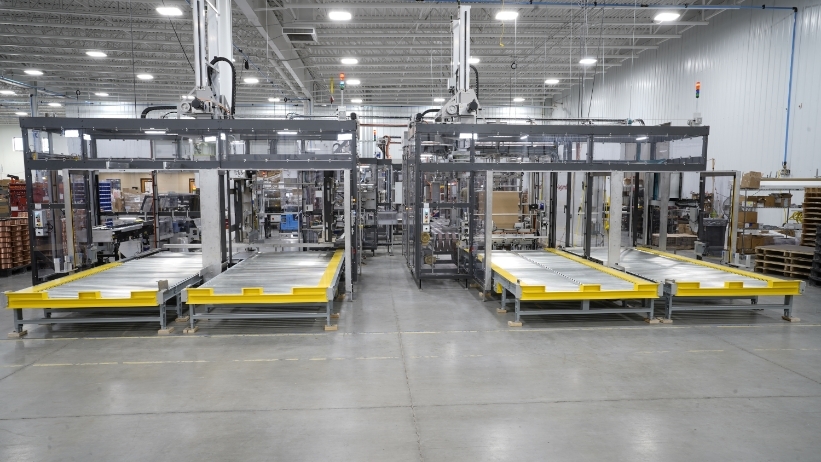
Semi-Automatic
Semi-Automatic
Automates key depalletizing steps while allowing operators to assist with tasks like layer separation or pallet changes where flexibility is needed.
Configure Your Depalletizer Machine Around Your Product & Pallet Format
Every Aagard depalletizer is engineered around your application: your product, pallet configuration, line rate, and operational goals—then configured with the options that best support how your line needs to run.
The options below represent our most commonly configured selections, not the full scope of what's possible. Our team is happy to discuss anything not listed here.
Automation & Product Handling
The foundation of your system. These options define the core depalletizer configuration and how it handles your product, layer pattern, and infeed requirements.
| Common Options | What It Delivers |
|---|---|
Primary Depalletizer System |
A purpose-built depalletizer engineered around your product, pallet type, layer pattern, and line rate—designed for reliable infeed and integration |
Robotic / Vision-Guided Handling |
Adds robotic or vision-guided layer handling for applications requiring flexible product handling, gentle contact, or variable pallet configurations |
Layer Detection / Pallet Height Sensing |
Automatically detects layer height and pallet position to maintain consistent product handling without manual adjustment between pallets |
Infeed Conveying and Accumulation |
Conveying, singulation, product orientation, and accumulation configured to your line flow and downstream equipment requirements |
Slip Sheet / Tier Sheet Removal |
Automatically removes slip or tier sheets between pallet layers to support uninterrupted infeed flow |
Empty Pallet Handling / Discharge |
Manages empty pallet removal and staging so operators aren't manually clearing pallets from the cell |
Changeover, Controls, & Operator Experience
For lines running multiple SKUs, container types, or pallet patterns, or where operator usability and training speed are a priority.
| Option | What It Delivers |
|---|---|
Rapid Launch™ (Monitored) |
Helps operators set up new recipes faster with guided, verified adjustments, reducing changeover time and start-up errors |
Rapid Launch™ (Automatic) |
Automates changeover points where practical to deliver the fastest recipe changes and more positive restarts on multi-SKU lines |
Additional HMI |
Adds an operator interface at the point of work to streamline operation, troubleshooting, and changeovers without walking the line |
FactoryTalk Optix HMI Upgrade / OptixPanel HMI
|
A more modern, intuitive HMI experience that supports easier operation and diagnostics, aligned with Rapid Learning™ operator tools |
Training Videos (Changeover) |
Short, on-machine videos that reinforce correct changeover steps and speed up operator learning and consistency over time |
Recipe Management |
User roles, recipe backup and restore, and audit trail capabilities for regulated or multi-operator environments |
Rapid Learning™ Package |
HMI-embedded training tools, guides, and troubleshooting resources that help operators get up to speed faster and reduce reliance on tribal knowledge |
Compliance & Food Safety
For facilities with specific regulatory, plant, retailer, or food safety compliance requirements.
| Option | What It Delivers |
|---|---|
Metal Detectable Wire Ties |
Supports food safety programs by reducing the risk of foreign material from common maintenance consumables |
Food Grade Lubricant
|
Aligns with plant sanitation requirements and reduces compliance friction in food and beverage environments |
UL Electrical Panels
|
Meets customer or site electrical compliance requirements and streamlines approval and inspection in many facilities |
Circuit Breaker Upgrade
|
Available when application or plant electrical standards require it |
Sanitary / Washdown Design
|
Materials, finishes, and access features for cleaning when the environment or customer standard requires it |
Diagnostics, Integration, & Visibility
For facilities with specific regulatory, plant, or retailer compliance requirements.
| Options | What It Delivers |
|---|---|
LED Diagnostic Lighting |
Improves visibility at key access points and helps teams troubleshoot faster when a fault occurs |
Forensics Camera System |
Captures a rolling history around faults to speed root-cause troubleshooting and reduce unplanned downtime |
EtherNet/IP Module / Standard Network Architecture |
Simplifies controls integration and improves visibility by using a consistent, plant-friendly networking approach |
Remote Support (TeamViewer) |
Enables faster support response through secure remote diagnostics to keep the line running with less disruption |
Plant Network / OEE Integration |
Supports broader production visibility and reporting requirements when plant connectivity is required |
Vision / Verification |
Presence and position checks when application quality or safety requirements call for in-line verification |
Standard Features of All Aagard Depalletizing Machines
Proven Controls, Safety, & Engineering Built for Infeed Demands
Depalletizing is where the line starts. Inconsistent infeed, manual layer handling, and pallet variability create problems that compound downstream. Every Aagard depalletizer is built on a documented set of engineering, controls, and safety standards specifically selected for the demands of high-cycle, heavy-load beginning-of-line operations.
Every Aagard depalletizer ships fully tested before leaving the facility. Controls, safety circuits, and key machine functions are verified prior to shipment. When materials are available and the project scope includes them, a full run-off with customer product and materials is completed.
| Standard | What It Means for Your Line |
|---|---|
Category 3/Performance Level d Safety Design |
Safety architecture meets Category 3/PLd requirements, documented and consistent across all Aagard machine categories |
Magnetic Locking Guard Doors
|
Guard doors lock and release through controlled stop sequences, not manual latches |
NEMA 12 Rated Electrical Panels |
Control panels rated for industrial environments; UL-labeled panels available as an upgrade |
UL-Certified Electrical Components |
Electrical components are UL-certified as standard |
Rockwell Automation Controls Platform |
Controls architecture built on a documented, serviceable platform with broad parts availability |
Single Unified Controls Architecture |
Upstream and downstream equipment can be integrated under one control system, reducing coordination points and simplifying troubleshooting |
HMI-Embedded Documentation |
Maintenance guides, changeover instructions, and reference materials accessible at the machine
|
Documented Machine Standards |
Every build references Aagard's documented standards so your engineering team knows what they're getting before the project starts |
How a Custom Depalletizer Project Works at Aagard
One of the most common hesitations on a custom machine project isn't the machine itself. It's not knowing what happens after you fill out a form. Here's the full path from first conversation to a commissioned system running on your floor.
-
1
Application Discussion
Every project starts with a conversation about your application: what you're running, your line rate, your footprint, and your goals. This is an engineering intake, not a sales call.
-
2
Engineering Kickstart
Engineering Kickstart is the standard entry point for all Aagard projects. It's a structured, application-first evaluation where you work directly with Aagard engineers to define requirements, explore concepts, and align on the right configuration before committing to a full build. It reduces risk up front.
-
3
System Design & Build
Once requirements are defined and scope is locked, Aagard engineers design and build your system. This phase includes controls architecture, mechanical design, integration planning, and documentation. Your engineering team has visibility into the process and clear handoff points.
-
4
Factory Acceptance Test (FAT)
Every system goes through standard pre-shipment testing before it leaves Alexandria, MN. For projects where scope and preference support it, an expanded FAT demonstration package is available so your team can witness performance firsthand before the machine ships.
-
5
Installation & Commissioning
Aagard technicians handle installation and commissioning at your facility. Installation and commissioning estimates, along with shipping estimates, are provided with your quote. Timelines depend on system complexity and site readiness.
-
6
On-Site Training
Operator and maintenance training is included as part of the commissioning package. Additional training is available as your team grows or shifts change.
-
7
Ongoing Support via Aagard Assurance™
After go-live, your line is supported through Aagard Assurance™: a dedicated account contact, a spare parts list for your specific configuration, and 24/7 remote service availability via TeamViewer.
Why Aagard Is the Industry’s Leading Depalletizer Manufacturer
Purpose-built for your line, not pulled from a catalog. Here's what that means in practice:
Depalletizer Machine FAQs
+
Does Aagard make fully custom depalletizers, or are they based on standard configurations?
Aagard depalletizers are custom engineered for each customer's application but built from a documented set of standards and configurable options. That means your system is tailored to your product, pallet type, and line layout without starting from scratch.
+
How do I evaluate a depalletizer machine without published specifications?
Start with your application: what you're unloading, your pallet configuration, your line rate, and your infeed requirements. Aagard's engineering team uses that information to scope the right system. Engineering Kickstart is designed specifically for this early evaluation phase and is creditable toward your purchase.
+
What is the difference between robotic, automatic, and semi-automatic depalletizers?
Robotic depalletizers use robotic arms to handle variable products, fragile containers, or mixed pallet configurations with precise, gentle contact. Automatic depalletizers sweep or lift entire layers and are best suited for consistent, high-throughput applications with stable product and pallet configurations. Semi-automatic systems automate key handling steps while relying on operators for select tasks, making them a practical fit for lower volumes or applications where full automation isn't required.
+
Can depalletizing equipment handle multiple SKUs, container types, or pallet patterns?
Yes. Multi-format capability is designed into the system through recipe management and configurable handling ranges. Rapid Launch™ options are available to help operators set up new product recipes quickly and repeatably, supporting faster, smarter changeovers on lines with variable pallet configurations or multiple SKUs.
+
Can Aagard integrate the depalletizing system with downstream packaging equipment?
Yes. Integration is a core part of the engineering process. Depalletizing is often the first step in a broader line, and integration scope—including infeed conveying, line controls, interlocks, and networking—is defined during the engineering phase so performance and accountability don't get split across vendors.
+
What safety standards do Aagard depalletizer machines meet?
Every Aagard depalletizer is built with Category 3 / Performance Level d safety architecture, including interlocked guarding and controlled stop sequences. Safety architecture is documented and consistent across all machine categories.
+
What support is available after the depalletizer is commissioned?
Aagard Assurance™ is included at no cost with every Aagard machine: a dedicated account contact, proactive check-ins, and expert guidance to keep lines running at peak performance. Remote diagnostics via TeamViewer, Rapid Learning™ HMI-embedded training tools, and service and parts support are also available after go-live.
+
What pallet types and configurations can Aagard depalletizing machines handle?
Aagard depalletizing machines are commonly configured for GMA and CHEP pallets, as well as custom pallet types when required. Layer pattern, pallet height, and slip or tier sheet requirements are all confirmed during the application review so the system is built around your actual incoming pallet configuration.
+
What information do you need to quote a depalletizer machine?
To scope the right system, we typically start with product details (dimensions, weight, fragility, container type), pallet configuration (pallet type, layer pattern, layer count, slip or tier sheets), target line rate, available floor space and line layout, and any downstream integration requirements. The more complete the information, the faster we can recommend a configuration and provide an accurate quote.
+
What is the typical lead time for a custom depalletizer project?
Lead times vary based on scope and complexity. The biggest drivers are application requirements (product type, pallet configuration, integration points), component availability, and the availability of customer-provided product and materials for testing. After an application review or Engineering Kickstart, we can provide a more accurate timeline with your quote.
+
How long does a changeover take, and what drives changeover time?
Changeover time depends on what changes between SKUs or pallet configurations: recipes, mechanical adjustments, and verification steps. Rapid Launch™ options—both monitored and automatic—are designed to guide operators through setup, reduce errors, and return to production faster. The right approach is defined during the application review based on your product mix and downtime tolerance.
+
Can depalletizer machines handle slip sheets or tier sheets between pallet layers?
Yes. Slip sheet and tier sheet removal is a common option and can be integrated into the depalletizing cell so sheets are automatically removed and staged without operator intervention. Requirements are confirmed during the application review.
+
What does installation and commissioning look like for depalletizing systems, and what does Aagard need?
Aagard technicians handle installation and commissioning at your facility. We'll confirm utility requirements, floor plan and line access needs, and any site-specific standards during the project. Installation and commissioning estimates are included with your quote.
Tell Us About Your Line
We'll Tell You How We'd Build for It
Do you have a specific situation at the end of your line that off-the-shelf equipment hasn't handled well?
Tell us about it. Aagard will follow up to schedule a short application discussion to understand your product, speed, layout, and goals. From there, we'll recommend the best-fit configuration and next steps.
Custom scope. Documented standards. Proven implementation. Built in Alexandria, MN.