Packaging automation is a significant investment. The question most manufacturers ask first is: how long until it pays for itself?
The honest answer is that it depends. Payback timelines vary based on your labor costs, line speed, current downtime, and how well the system is matched to your application. But the framework for calculating it is consistent, and the inputs that drive the return are the same regardless of the machine you are evaluating.
This guide walks through that framework. We'll cover where the returns actually come from, how to calculate payback for your specific operation, what drives ROI for each machine type, and what tends to slow down returns when the calculation doesn't work out as expected.
In this guide:
The ROI Conversation Has Changed
Companies aren't evaluating automation the same way they did five years ago.
The conversation used to start and end with labor savings. Run the headcount math, estimate payback, make the call. That calculation still matters, but it's no longer the whole story.
Today, manufacturers are also weighing operational risk. The questions on the table now look like this:
- How reliably does the line run day after day?
- What happens to output if we can't staff the end of the line?
- What is the physical toll of repetitive manual work on our workforce?
- Can we consistently meet shipment demands as volume grows?
- How quickly can we adapt if production requirements change?
The question has quietly shifted from "Will automation pay for itself?" to "What does it cost us if we don't automate?"
That shift matters for how you build the business case. Labor savings is still a real and measurable input. But operational risk, staffing reliability, injury prevention, and throughput consistency are also real costs. They just don't always show up on a spreadsheet until something goes wrong.
A complete ROI analysis accounts for both.
Where the Returns Actually Come From
Before you can calculate payback, you need to understand what you're actually getting a return on. Packaging automation generates value across three categories, and most operations see returns in all three simultaneously.
Labor Reduction
This is the most visible input. Fewer operators needed at the end of the line, across every shift, every day. For operations running two or three shifts with multiple people on manual packing or palletizing, the annual labor cost baseline is often higher than people initially estimate once you factor in wages, benefits, overtime, and turnover costs.
Turnover is a cost that frequently gets left out of the calculation. When a physically demanding role has high turnover, you're absorbing recruiting, onboarding, and training costs repeatedly. Automation doesn't eliminate your workforce, but it reduces exposure to that cycle.
Throughput Improvement
A well-integrated automated system runs faster and more consistently than manual processes. More output per hour means more revenue per shift without adding headcount or floor space.
The consistency piece matters as much as the speed. Manual lines slow down toward the end of a shift, speed up inconsistently, and vary by operator. Automated systems run at the same rate at hour one and hour ten.
Error & Waste Reduction
Mispacks, product damage, inconsistent case counts, and downstream chargebacks all carry real costs. Automation eliminates most of them.
For operations where errors are generating rework, customer deductions, or wasted materials, this category can contribute meaningfully to the return even when labor savings alone wouldn't justify the investment.
Pro tip: The strongest ROI cases aren't built on one big number. They're built on several smaller, well-documented savings that add up across labor, throughput, and quality.
How to Calculate Payback for Your Line
The payback formula itself is simple: divide your total investment by your projected annual savings. The harder work is making sure both inputs are accurate.
Step 1: Build Your Cost Baseline
Start with what you're spending today. This is your annual cost to run the process you're automating:
- Fully-Loaded Labor Cost: Wages, benefits, overtime, and estimated turnover cost for every operator in the role, across every shift
- Downtime Cost: Hours of lost production from manual process inconsistency, multiplied by your revenue per hour of output
- Error and Waste Cost: Rework, mispacks, chargebacks, and damaged product over a 12-month period
- Injury and Workers' Comp Cost: Particularly relevant for physically demanding roles like palletizing or repetitive case packing
Use conservative numbers. If you're not sure on a figure, estimate low. The goal is a defensible baseline, not an optimistic one.
Step 2: Establish the Total Investment
The total investment is more than the equipment price. Include:
- Equipment cost
- Integration and controls
- Installation and commissioning
- Training
- Any facility modifications required
Leaving items out of the investment figure makes the payback look faster than it is. That creates problems when actual results don't match the projection.
Step 3: Project Annual Savings
Compare your cost baseline against the projected cost of running the automated line. The difference is your annual savings. This should account for:
- Reduced operator headcount at the end of the line
- Throughput improvement (additional output per shift)
- Reduction in errors, waste, and chargebacks
- Reduced injury exposure
Step 4: Run the Calculation
Payback Period = Total Investment ÷ Annual Savings
If your total investment is $800,000 and your documented annual savings across labor, throughput, and error reduction is $250,000, your payback period is approximately 3.2 years. That's a straightforward calculation. The quality of the answer depends entirely on the quality of the inputs.
Pro tip: Run the numbers with your actual costs, not industry averages. Operations with higher labor costs, more shifts, or more expensive downtime will see faster payback. Operations with lower volume or fewer operators at the end of the line will see longer timelines. Both outcomes are valid. The point is to know your number before you commit.
What Drives ROI for Each Machine Type
The same framework applies across machine types, but the primary return drivers differ. Understanding what moves the needle for each helps you build a more accurate projection.
Case Packers
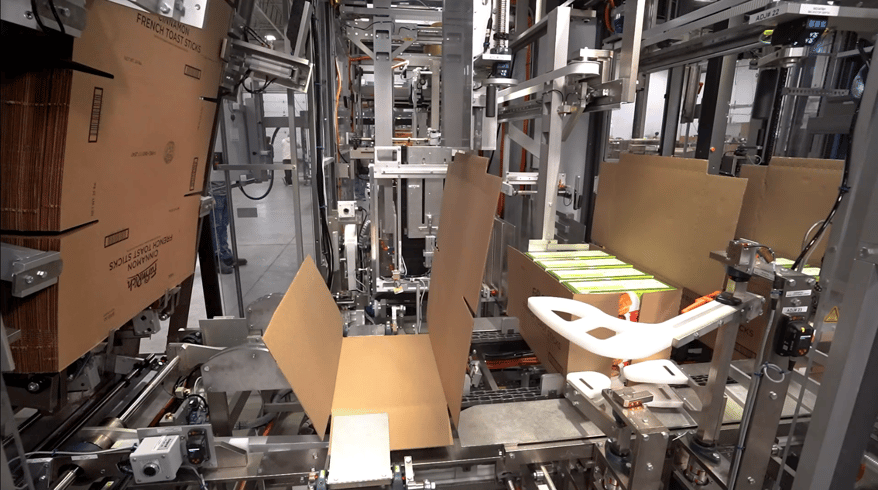
Case packing ROI is typically driven by labor reduction and throughput improvement. If you're running multiple operators on manual case packing across two or three shifts, the labor cost baseline is often the largest single input in the calculation.
Throughput consistency is the second driver. Manual case packing slows down over a shift and varies by operator. An automated case packer runs at the same rate continuously, which means more cases per shift and more predictable output for your distribution commitments.
Error reduction matters here too. Mispacks and inconsistent case counts create downstream problems, including chargebacks from customers. Automation eliminates most of the variation that causes them.
Palletizers
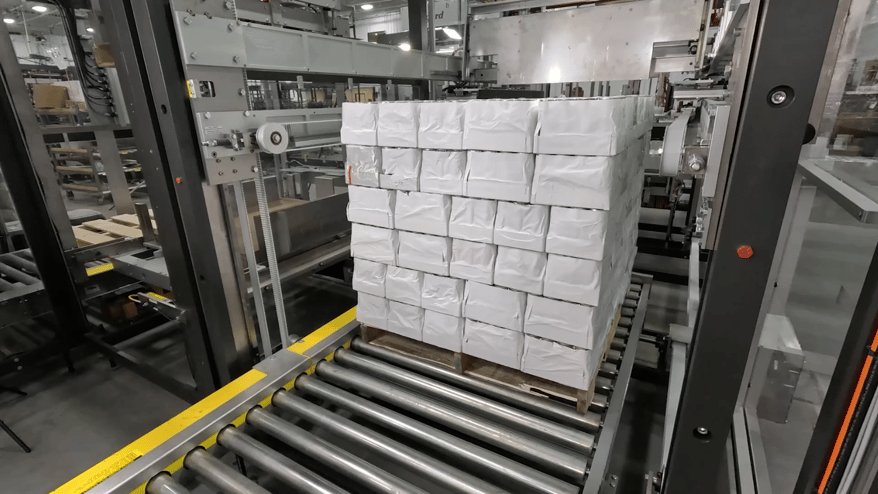
Palletizer ROI tends to be strong for one reason: the labor cost baseline is high and the injury and turnover costs are frequently underestimated. Palletizing is one of the most physically demanding roles on a production floor. High turnover, workers' comp claims, and the difficulty of staffing the role consistently all contribute to a cost baseline that often looks larger than expected once it's fully documented.
A palletizer that runs consistently across all shifts, builds every pallet to the same pattern, and eliminates the physical demands of the manual role generates returns across multiple cost categories simultaneously. The throughput consistency piece also matters. A palletizer that keeps pace with upstream equipment prevents end-of-line bottlenecks that back up the entire line.
Cartoners
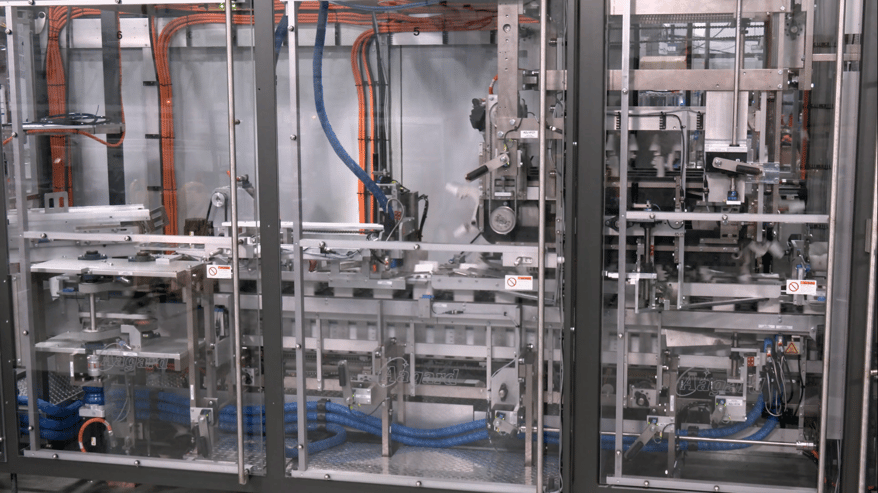
Cartoning ROI is typically driven by throughput improvement and downstream error reduction more than raw headcount savings. If manual cartoning is your line's speed constraint, the value of removing that bottleneck goes beyond the labor calculation.
Inconsistent cartoning also creates problems downstream. Poorly formed cartons cause jams in case packers, damage in transit, and presentation issues at retail. Automation eliminates most of that variation, which means fewer downstream problems and cleaner output across the entire line.
Depalletizers

Depalletizer ROI is typically driven by labor reduction, safety improvement, and throughput consistency. Manual depalletizing requires operators to repeatedly lift and handle product throughout a shift, which creates staffing challenges and ergonomic risks similar to manual palletizing. When that role is hard to staff or sustain, the labor baseline becomes larger than it initially appears.
Consistency is the second driver. A depalletizer that feeds product at a steady, predictable rate keeps downstream equipment running without interruption. Preventing stops caused by manual loading delays can generate meaningful throughput gains across the entire line, especially in higher-volume operations where upstream inconsistency impacts everything that follows.
Case Erectors

Case erector ROI is driven by labor reduction, throughput improvement, and upstream line efficiency. Manually forming cases may seem like a small task, but the labor adds up quickly across shifts, particularly when operators are spending time on box setup instead of higher-value work on the line.
The bigger impact is consistency. A case erector that delivers a steady supply of properly formed cases removes a common source of interruptions before case packing begins. That improves downstream performance, reduces misfeeds, and keeps the entire system running at a more consistent rate.
Case Sealers

Case sealer ROI is typically driven by labor savings and packaging consistency. Manual sealing introduces variability in tape application, seal quality, and output rate, which can create issues during handling, shipping, and distribution. Over time, those inconsistencies translate into real cost.
Automation standardizes the process. A case sealer applies consistent seals at a steady rate across the entire shift, which improves package integrity and reduces the risk of damage or rejected shipments. For higher-volume operations, maintaining that consistency contributes directly to overall line efficiency and return.
Sleevers

Sleever ROI is driven by material savings, throughput improvement, and packaging efficiency. Compared to traditional cartons, sleeving reduces material usage while still delivering the branding and merchandising needed for retail display. That reduction in packaging cost is often a primary input in the ROI calculation.
Operationally, sleevers also improve line performance. Automated product grouping and consistent application increase throughput and reduce manual handling. When material savings and operational gains are combined, sleeving can contribute meaningfully to overall payback.
Tray Packers

Tray packer ROI is typically driven by labor reduction and increased packaging efficiency. Manual tray loading can become a bottleneck as production volumes grow, particularly in applications like food, beverage, and club store packaging where speed and consistency matter.
Automation removes that constraint. A tray packer maintains a consistent loading rate, improves package quality, and reduces the variability that slows manual processes down. The return comes from both reduced labor and the ability to hit production targets more reliably during peak demand periods.
What Slows Down Payback (& How to Avoid It)
Not every automation investment delivers the projected return on schedule. When payback is slower than expected, it usually comes down to one of a few common problems.
The System Wasn't Matched to the Application
A machine that's over-engineered for your volume, under-engineered for your product, or designed for a different format than what you're running will underperform. The investment figure is accurate, but the savings are lower than projected because the system doesn't run as well as it should. This is the most common cause of disappointing ROI, and it's almost always a pre-purchase problem, not a post-installation one.
The Full Investment Wasn't Captured Upfront
If the payback calculation only included the equipment price and left out integration, installation, training, and facility modifications, the actual investment is higher than projected. That extends the payback timeline. Build the complete number before you run the calculation.
The Cost Baseline Was Underestimated
Optimistic labor cost estimates, ignoring turnover, or leaving out downtime and error costs all produce a baseline that's too low. When the baseline is too low, the projected savings are too low, and the investment looks harder to justify than it actually is. Document your costs carefully before building the projection.
Integration Wasn't Planned from the Start
A case packer or palletizer that doesn't communicate cleanly with upstream and downstream equipment creates friction that reduces throughput gains. If integration is treated as an afterthought, you may not capture the full throughput improvement the system is capable of delivering. Systems designed with integration in mind from the beginning run better and generate returns faster.
Ready to Run the Numbers on Your Line?
The ROI framework in this guide works for any packaging automation investment. But the accuracy of the output depends entirely on the quality of the inputs, and that starts with a clear picture of your application.
The questions that matter most aren't about payback formulas. They're about your product, your line rate, your current end-of-line setup, and what it's costing you every shift. Get those right, and the investment case follows naturally.
If your operation has challenges that a catalog machine or a generic ROI calculator hasn't accounted for, that's exactly where a purpose-built engineering conversation makes the difference.
Aagard designs and builds custom case packers, palletizers, cartoners, sleevers, depalletizers, and combination end-of-line systems for a variety of consumer packaged goods manufacturers. Every system ships with a documented engineering baseline, pre-shipment testing, and Aagard Assurance™ lifetime support included.
Talk to an Aagard engineer about your line. We'll help you build an honest picture of what automation would actually return for your operation.