The answer is smarter automation.
Today's packaging lines need more than speed, they need intelligence. Vision systems and advanced controls help manufacturers detect issues earlier, guide equipment in real time, and keep production moving with fewer interruptions.
Together, they reduce waste, improve product quality, and make zero-defect packaging a more achievable goal.
Why Vision & Intelligent Controls Matter
Catch Defects Before They Become Problems
Modern vision systems inspect every product at production speed, identifying issues before they reach downstream equipment or the customer. They can verify:
- Product presence and orientation
- Package counts
- Labels, seals, and print quality
- Barcodes and lot codes
- Damaged or inconsistent products
By catching errors early, manufacturers reduce scrap, rework, and costly production interruptions.
Vision Systems Do More Than Inspect
Today's cameras don't just detect problems—they help guide automation.
When integrated with robotics and controls, vision systems allow equipment to adjust in real time by:
- Picking randomly oriented products
- Correcting placement automatically
- Handling product variation
- Maintaining consistent flow despite upstream changes
This flexibility helps packaging lines run reliably, even in high-mix production environments.

Intelligent Controls Keep the Line Running
Behind every efficient packaging line is a control system continuously monitoring machine performance.
Smart controls can:
- Detect abnormal machine behavior before failures occur
- Automatically adjust speeds and timing
- Coordinate conveyors and robotics
- Guide operators through recovery with clear diagnostics
Instead of reacting to downtime, manufacturers can often prevent it altogether.
How Aagard Builds Smarter Packaging Systems
At Aagard, vision systems and intelligent controls work together to simplify complex packaging operations.
Our systems feature:
- Vision-guided robotic picking and product verification
- Unified controls across the packaging line
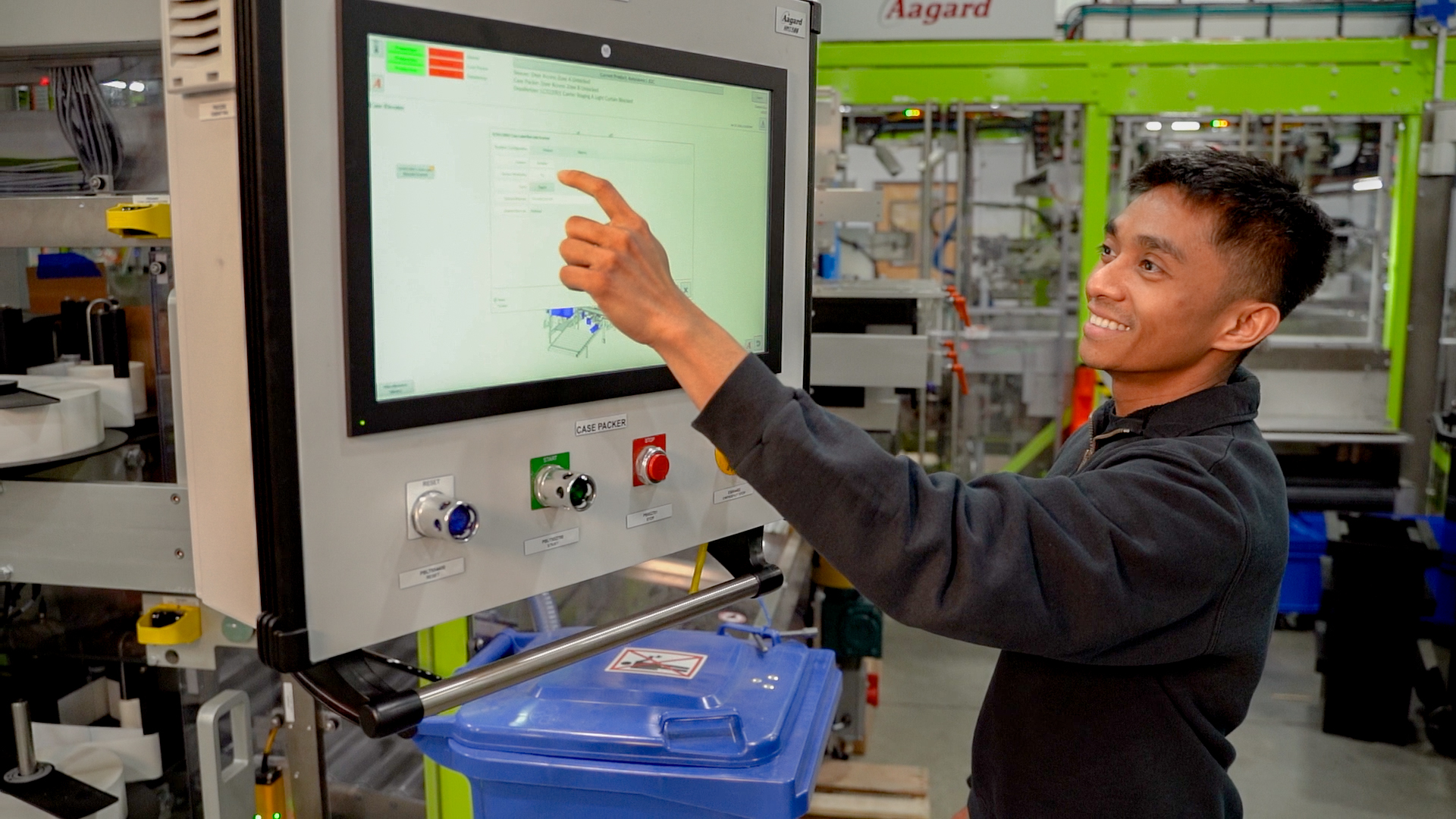
- Operator-friendly HMIs with visual diagnostics
- Guided recovery for faster restarts
- Recipe-driven automation for repeatable changeovers
The result is equipment that's easier to operate, easier to troubleshoot, and more consistent shift after shift.
Real-World Results
For one manufacturer packaging flexible pouches, inconsistent product orientation caused frequent jams before cartoning.
Aagard implemented a vision-guided robotic solution that identified pouch orientation in real time and adjusted robotic motion automatically.
The result:
- Fewer jams
- Improved uptime
- More consistent product handling
- Higher overall production efficiency
Smarter Automation Starts with Better Visibility
Zero-defect packaging isn't achieved through faster equipment alone. It comes from systems that can see problems, communicate across the line, and help operators respond before small issues become costly downtime.
By combining advanced vision technology with intelligent controls, manufacturers can improve quality, increase uptime, and build packaging operations that are more reliable today—and ready for tomorrow.
FAQ
-
What is a vision system in packaging automation?
A vision system uses industrial cameras and software to inspect products as they move through the packaging line. It can verify product orientation, check labels and barcodes, confirm package quality, and help guide robotic movements—all in real time. The result is more consistent packaging with fewer errors reaching the next stage of production.
-
How do intelligent controls improve packaging line performance?
Intelligent controls keep every part of the packaging line working together. They monitor machine performance, coordinate equipment, and provide operators with clear diagnostics when something needs attention. By identifying issues early and helping teams recover quickly, they reduce downtime and keep production running smoothly.
-
Can vision systems reduce packaging defects?
Yes. Vision systems catch issues like missing products, incorrect labels, damaged packages, or misaligned items before they become larger production problems. Detecting defects early helps reduce waste, minimize rework, and deliver a more consistent product to your customers.
-
How do vision systems work with robotics?
Vision systems give robots the information they need to adapt in real time. Instead of relying on perfectly positioned products, robots can identify product location and orientation, adjust their movements, and place items accurately—even when product presentation varies. That flexibility helps improve throughput and reduce interruptions.
-
What are the benefits of combining vision systems with intelligent controls?
When vision systems and intelligent controls work together, packaging lines become more efficient, more reliable, and easier to operate. Manufacturers benefit from fewer defects, less downtime, faster troubleshooting, and greater confidence that every package meets quality standards.